








Ever walked into your living room, looked around, and immediately felt your shoulders rise up like you’re bracing for impact even though the place is technically clean?
Hard same.
For ADHD brains, a room doesn’t have to be messy to feel chaotic. That overwhelming sensation? It’s often visual noise (which is that feeling when there’s so much stuff your brain doesn’t know where to land, the throw pillows or the pile of unopened mail).
Before I learned how to calm my space without scrubbing it top to bottom, or attempting to clean, I used to spiral every time I walked through my house.
I didn’t know that there were calming home tips for ADHD that could actually help me.
I thought I needed to declutter or deep-clean to feel better. Turns out, I just needed to soften the sensory chaos.
These days, now that I’ve figured out the tricks, I use tiny tweaks, like swapping a lightbulb or adding a blanket, to calm my super-sensitive nervous system and make my home feel less like a stimulus obstacle course.
Here’s what works for me.
12 Calming Home Tips for ADHD (No Cleaning Required)
Softer Lighting = Immediate Vibe Shift
1. I Ditched the Overhead Lights and Never Looked Back
Overhead lighting is a scam.
Okay, not technically, but for my ADHD brain, those blazing ceiling lights feel like a tactical assault on my eyeballs (and my mood). It’s like being interrogated every time I try to eat cereal.
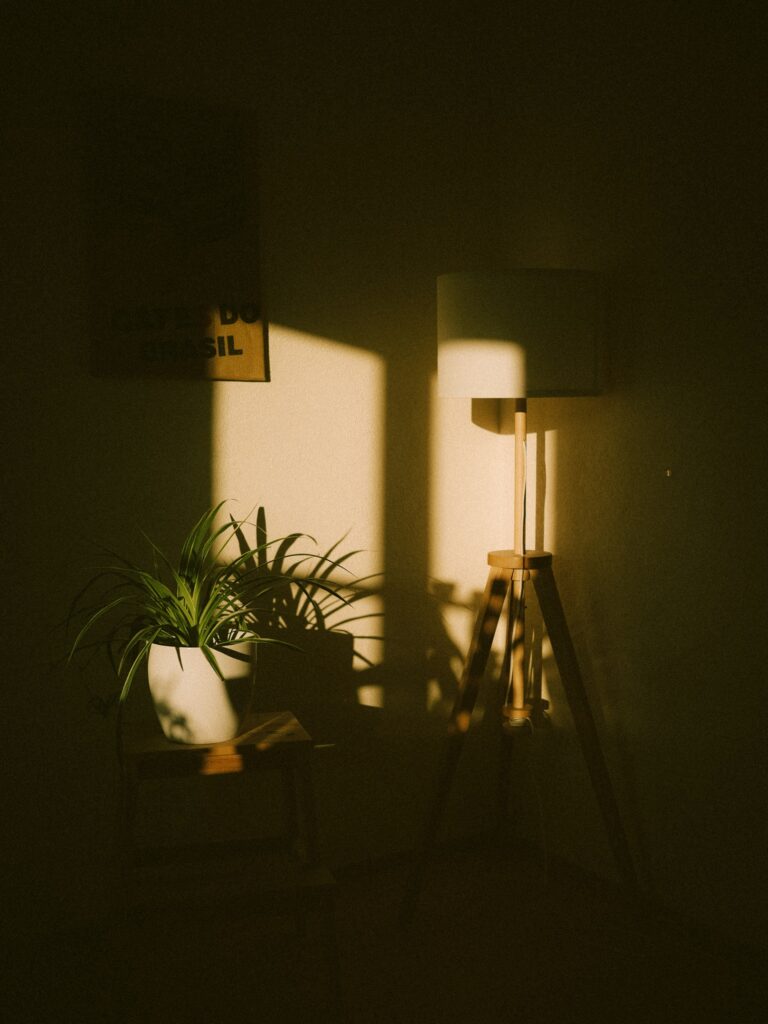
So now? I use floor lamps, wall sconces, fairy lights, and plug-ins that turn my space into a chill cave of ambient glow.
One of my favorite setups is a $12 plug-in night light and a paper lantern from IKEA that makes my living room feel like a cozy library, not a dentist’s office.
2. I Swapped to Warm Bulbs and Suddenly I’m Infinitely More Chill
Blue-white bulbs may be great for visibility, but they make my brain buzz, and I struggle to shut it off.
I noticed I was more on edge in certain rooms and couldn’t figure out why until I realized it was the lighting.
The moment I realized overhead lights were my mortal enemy, I swapped my bulbs to a “warm white” 2700K tone, and the difference was instant. My brain felt less jolted and more soothed.
It’s widely accepted that warm light promotes relaxation and is ideal for ambient lighting.
Now almost every light in my house is a Philips Hue (and I can tailor the light to the temperature I need), and it’s goated.
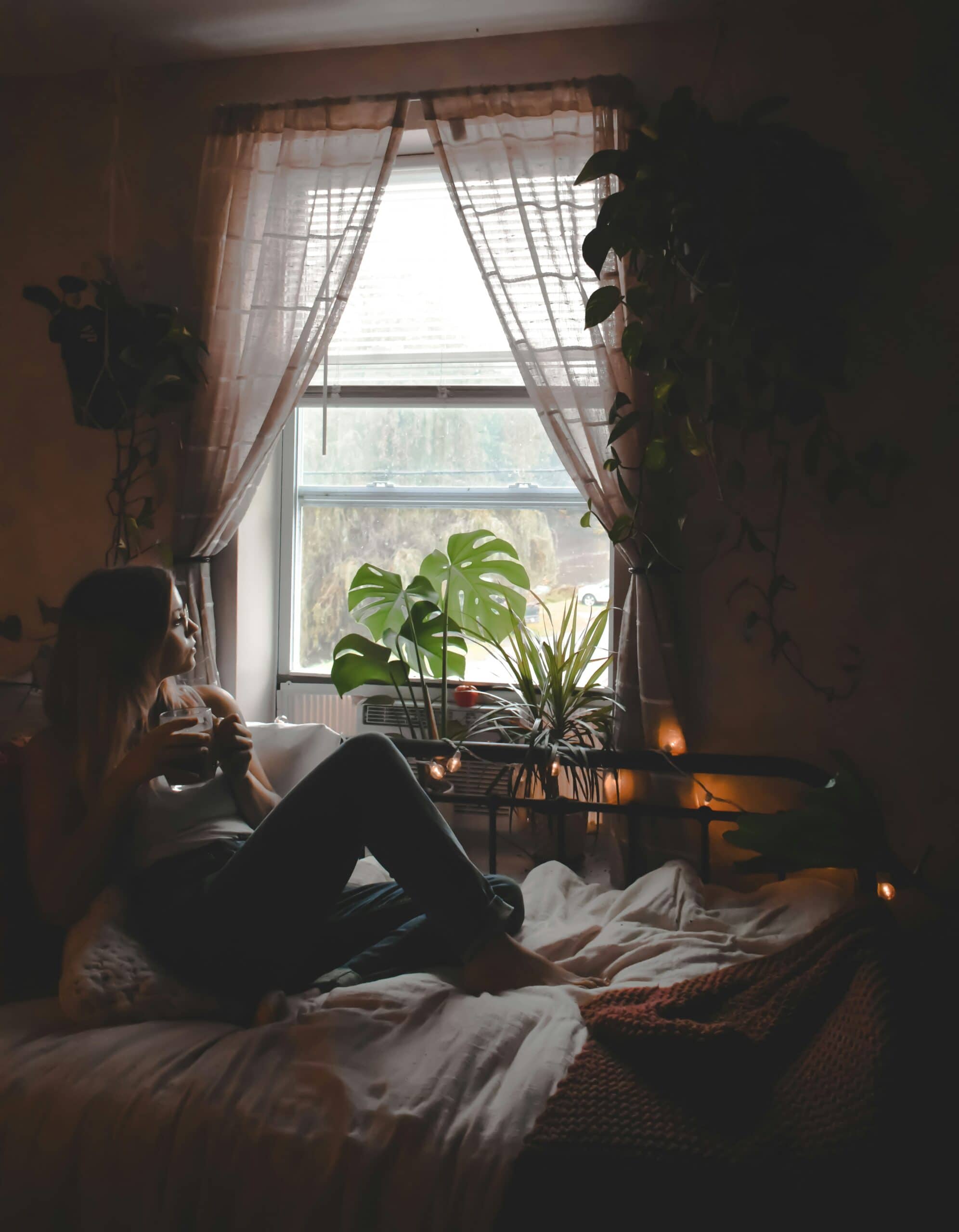
3. I Created One Magical “Glow Corner”
You don’t need an entire sensory room. Just one cozy, intentionally-lit corner.
Mine is a plant shelf with fairy lights, a salt lamp, and a sleepy little pothos that’s somehow still alive.
When I walk by it, I feel like someone’s giving me a soft pat on the back. That kind of ambiance matters when your brain is prone to chaos.
Micro Visual Calming Habits (aka Hiding the Chaos Creatively)
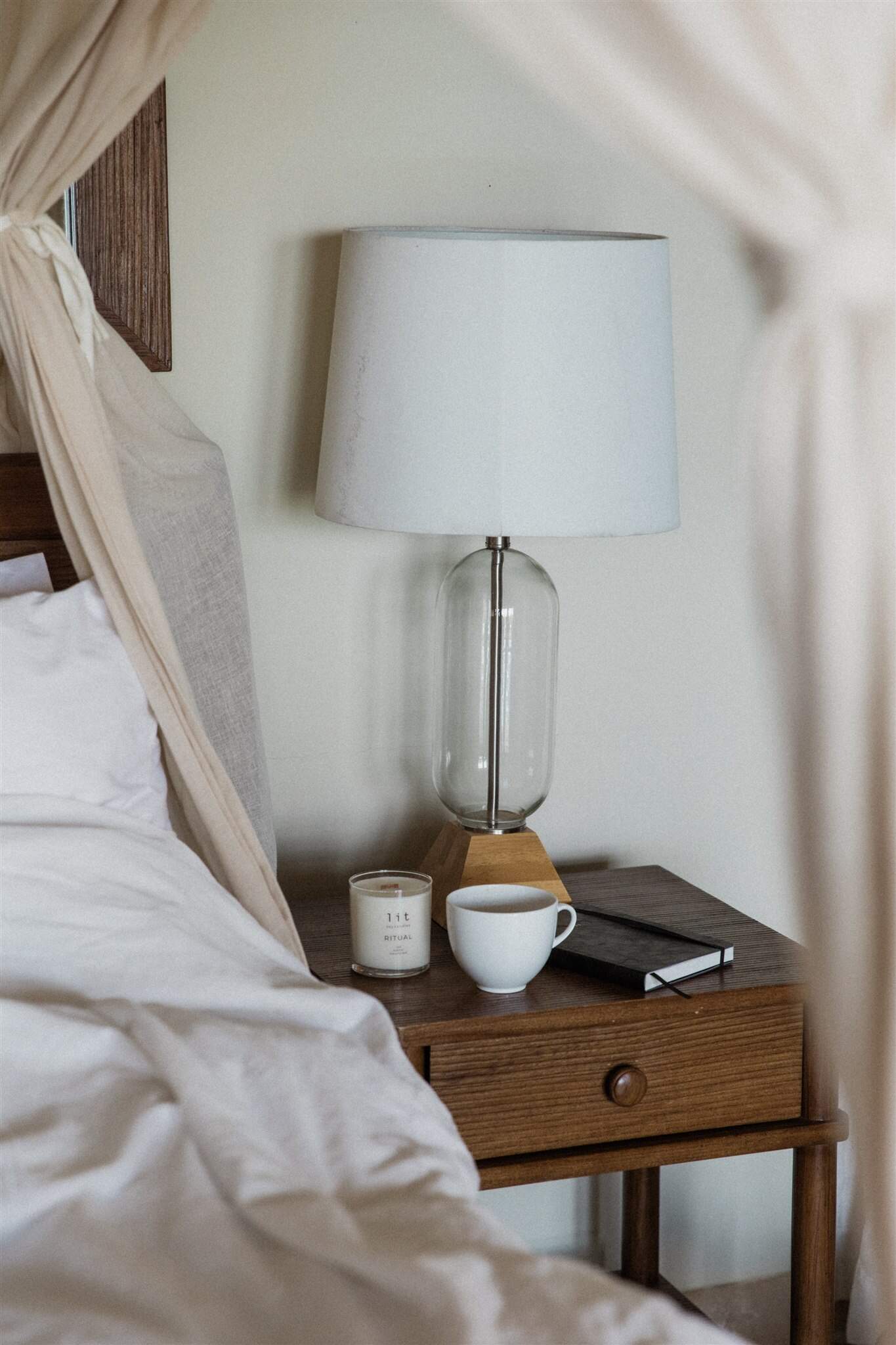
4. I Keep One Surface Clear (That’s It)
Minimalism? Never met her. But what I can do is clear off my nightstand or one of the kitchen counters.
Turns out, visual clutter makes my brain feel like a jumbled, hopeless mess. Keeping just one surface “quiet” is a mental signal that not everything is a speeding runaway train.
On anxious days, I clear off my dinner table and immediately feel like I’ve accomplished something, even if the rest of the room is a laundry explosion.
5. I Use Baskets Like My Life Depends on It
Baskets are decor magic for ADHD brains and households. They hide the chaos while still being accessible.
Cords? Basket. Random books I’m not reading but want to keep close? Basket. Receipts, chargers, dog toys? You guessed it. I have one basket that’s literally labeled “Stuff I Didn’t Know Where to Put.”
It doesn’t have to look Pinterest-worthy. It just needs to contain the mental noise.
6. I Created a “Drop Zone” for My Daily Chaos
Every day, I come home with things: keys, sunglasses, mail, reusable bags, random hair ties, and rogue snacks.
Instead of letting them land all over the house like glitter after a craft project, I now have a tray near the door.
It’s where the clutter goes on purpose. I still go through it weekly-ish, but just having one place for the chaos means it doesn’t spread like wildfire.

Sensory Comforts That Soothe My Jittery Brain
7. I Keep One Cozy Thing Within Reach at All Times
For me, it’s a giant sherpa blanket that basically counts as a security blanket at this point.
I keep it draped over the back of the couch, and the second I’m overwhelmed, it’s like armor.
Soft textures equal immense and bone-deep comfort.
Whether it’s a weighted blanket, a fuzzy pillow, or the hoodie you’ve had since college, that sensory hug is legit brain-soothing magic.
8. I Run Background Noise Like It’s White Noise for My Soul
ADHD brains and silence aren’t the best combo. Without background noise, I basically end up having an inner monologue at 100 decibels.
I used to think I was weird for always needing sound, but then I discovered brown noise and lo-fi playlists. Game-changer.
Now, I have a Bluetooth speaker in nearly every room of my home. Yes, even the bathroom.
When I’m feeling scattered, I turn on ambient café noise or nature sounds and trick my brain into thinking I’m productive and relaxed, even if I’m just refilling my water filter.
9. I Open a Window for 2 Minutes and Pretend I’m Healing
I had a tendency to keep my house locked up tight. Old air recirculates, which can be a total drag.
But opening a window can do absolute wonders, and I’ve started doing it more regularly.
Even when it’s freezing, even when I haven’t left the house in two days, cracking a window resets the whole vibe.
There’s something so vital and refreshing about fresh air. It’s like my brain goes, “Oh! We’re not stuck! There’s a world out there!” and unknots just a little.
Small Flow Tweaks That Make Life 10% Easier
10. I Store Things Where I Actually Use Them
Forget what “organizing” influencers say. ADHD organization needs to be frictionless.
If the wipes are always by the toilet, keep them there. If you always put on Chapstick in the kitchen, stash one there, too.
I’ve got lip balm in every drawer, nail clippers in three rooms, and paper towels under the bathroom sink.
My house is not “organized,” but it’s livable, and that matters way more.
11. I Keep Duplicates of Anything I Use Daily
The number of times I’ve wasted energy hunting for one phone charger? Embarrassing.
Now I keep doubles and triples of things I know I’ll need: earbuds, pens, scrunchies, hand lotion, and gum.
If it prevents one meltdown or saves me 10 minutes of searching, it’s worth the duplication.
Also, no one talks about how helpful it is to keep a second trash can in your bedroom or a mini vacuum by the couch. Total gamechangers.
12. I Do a 30-Second Room Reset and Call It a Day
Walk into a room? I toss one piece of trash, fluff a pillow, fold the blanket, and boom, it looks 10% better.
That little burst of tidying doesn’t just help my space. It helps my brain believe that I can handle life, one unimportant micro-task at a time.
Sometimes, I set a one-song timer and reset as much as I can in three minutes. It’s shockingly effective and doesn’t feel like cruel and unusual punishment.
Bonus: My Sensory-Soothing ADHD Home Toolkit
Here is shorthand for a few of my MVPs that keep my space calmer, even when my brain is chaos:
- Himalayan salt lamp – warm, glowy, not too bright
- Woven baskets – hide everything. Bless them.
- Brown noise playlist – less annoying and more calming than white noise
- Weighted blanket – feels like a bear hug from the universe
- Soft bulb string lights – turn any corner into a cozy one
The Takeaway: Tiny Habits, Big Energy Shift
I’m not naturally neat. In fact, I’m naturally messy.
I don’t thrive in chaos, but I also don’t thrive with rigid systems. This is why these calming home tips for ADHD have been so helpful.
What I’ve learned is that a calming space doesn’t have to be a perfect space. The key is making it feel less loud to your brain.
So no, I’m not dusting my baseboards every week or labeling the pantry with a Cricut. But I am:
- Swapping one lightbulb for a warmer one
- Putting a fuzzy blanket where I need comfort
- Clearing off my nightstand once a week
- Giving myself permission to keep the place cozy instead of clean
These little habits don’t silence the ADHD, but they absolutely soften the static.
If your house has been feeling “off” and you don’t know why, try one or two of these. You don’t need to clean the whole place. But these lower the volume a bit. Your brain will thank you.


For when your house isn’t messy, but your brain thinks it is.




Real-Life
Work in Progress.
Founder. Writer.
Roxy is the creator of The Everyday Flourish, a relatable personal growth blog for women who are tired of burnout, chaos, and hustle culture.
A recovering overthinker and unofficial life guinea pig, she shares honest self-care strategies, ADHD-friendly productivity tips, and mindset shifts that actually feel doable.
Around here, personal growth comes with grace, not pressure - and a lot fewer to-do lists.